
Since last spring, we have been exhibiting artworks in the B1 corridor of the Mitsubishi Building in Marunouchi, Tokyo.
From July 25, 2026, we are pleased to present an exhibition of works by Haruka Teshima.
If you are interested in purchasing any of the exhibited artworks, please feel free to contact us for further information.
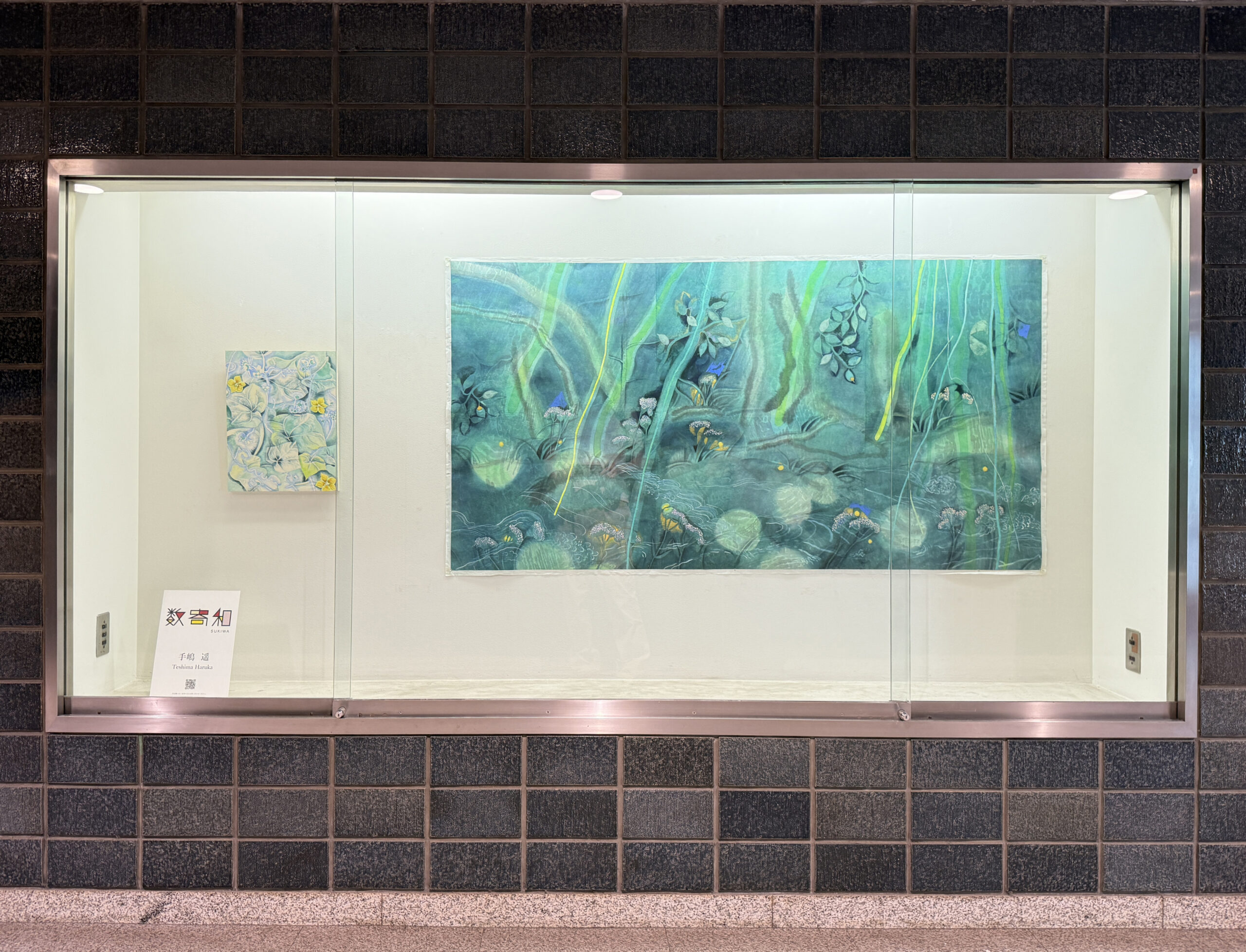
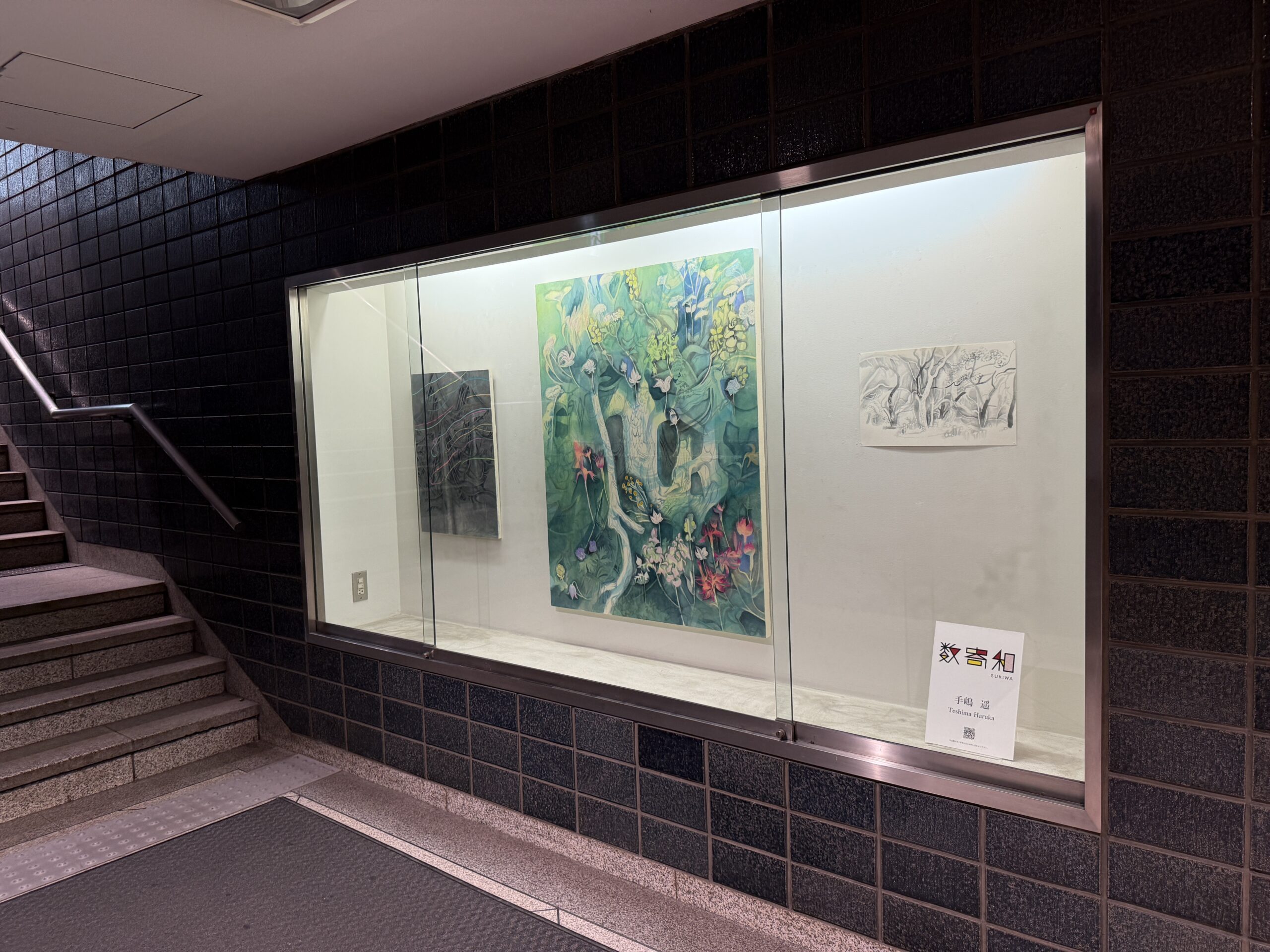
Haruka Teshima
1992 Born in Yamaguchi,Japan
2014-2016 Musashino Art University Graduate School,Tokyo,Japan M.F.A in Japanese painting
2010-2014 Musashino Art University ,Tokyo,Japan B.F.A in Japanese painting
AWORDS
2018 The 54rd Kanagawa Art Exhibition 2018 〈3rd place〉(特選)2022 Yoshino Gypsum Co.,Ltd. scholarship recipient
EXIBITION
2025 solo exhibition [When the wind blows] ogi gallery /Kanagawa
2024 Fuchu Art Museun Open Studio Program 89 Haruka Teshima
About a Small Mountain Yet to be Seen (まだ見ぬ、小さな山について)
/Fuchu Art Museum /Tokyo
Solo exhibition Water Scape(水映), Galery Café 3 /Tokyo,
2023 solo exhibition [Anthology – journey(旅)] Gallery Café 3 / Tokyo
solo exhibition [Wind Rose Ⅱ(風配図Ⅱ)] Tamashin Art Museum / Tokyo
solo exhibition [Wind RoseⅠ(風配図Ⅰ)] / Court Gallery Kunitachi /Tokyo
2022 [Green vibration ] / Koganei ART Spot Chateau 2F / Tokyo
2021 solo exhibition [serenade] /GalleryCafe 3 /Tokyo
solo exhibition [ Ametsuchi|wetland ] /Gallery Natsuka /Tokyo
[4- sign(4の気配) ]/ UNPELGALLERY /Tokyo
2020 solo exhibition [Almanac(日読み)] Fuchu Art Museum Citizen’s Gallery/Tokyo
2019 [ Musashino Art University The Research Associate Exhibition 2019]
/Musashino Art University Museum and Library/Tokyo
2018 solo exhibition [Suimutan(水夢譚)] galleria grafica bis/Tokyo
Musashino Art University The Research Associate Exhibition 2018 /Musashino Art University Museum and Library /Tokyo
The 54rd Kanagawa Art Exhibition 2018 / Kanagawa Prefectural Civic Hall /Kanazawa
[ Musubikino-kai(結香会)] / Fujita Gallery / Tokyo
2017 [ Musashino Art University The Research Associate Exhibition 2017]
/Musashino Art University Museum and Library /Tokyo
[ Fine Art Universiade U-35 ] / TUKUBA Museum of Art IBARAKI / Ibaraki
[ The 53rd Kanagawa Art Exhibition 2017]/ Kanagawa Prefectural Civic Hall / Kanazawa
[ Musubikino-kai(結香会)] / Fujita Gallery / Tokyo
2016 [ Shichisairinn(七彩輪)2016]/GalleryKaze(Gallery風)/Tokyo
[ Joint Graduation Exibition of 5 Art Universities in Tokyo] /The National Art Center/Tokyo
[ Musashino Art University Dgree Show 2015] /Musashino Art University/Tokyo
[The 42rd Shunnki Soga-ten(春季創画展)]/ The Ueno Royal Museum /Tokyo
〈’17‘18‘19‘20‘21‘22‘25〉
2015 [ The 42rd Soga-ten(創画展)]/ Tokyo Metroporitan Art Museum/Tokyo. 〈’16‘18‘19‘20‘21‘22‘23‘24‘25〉
[ ∪(Union)-Japanese painting Exibition-]
/Meguro Museun of Art Citizens Gallery/Tokyo
[ Shinso-ten(晨颯展)]/Art Gallery Kawabe(かわべ美術)/Tokyo
2014 [Kisuiiki(汽水域)]/Musashino Art University/Tokyo
I often find unexpected forms within the landscape. Things in the foreground connect with those in the distance, giving rise to complex spaces. The leaves at the tips of branches suddenly catch the light, and for a fleeting moment each one comes sharply into focus, only to blur again. The mountain range reflected upside down on the water’s surface disappears the instant the wind begins to blow. The landscape is constantly changing, never taking the same form twice.
People remember landscapes through the passage of time, constantly shifting their point of view as they try to perceive them. What sounds were there at that moment? What was the weather like? What was I thinking? What drew my gaze, and how did my eyes move? As I contemplated how to give form to the experience of being within a landscape, I decided to retrace my own vision through the process of making. To re-experience the movement of my gaze and the passage of time, I layer, overlap, and separate thin sheets of washi paper. As though adjusting the focus of a lens, I gradually apply sizing to the paper in stages while continuing to paint. Lines drawn with sumi ink on washi saturated with water seem to fade into the depths of the paper. In contrast, mineral pigments applied to sized paper appear to advance toward me. As these multiple layers intertwine, my experience gradually takes shape.
Through this process, I came to realize that seeing and emotion can never truly be separated. Precisely because of this, the human eye overlooks so much, while at the same time it is capable of perceiving things that others cannot see.